If you are one of the millions of people who dream of tossing their glasses or contact lenses for good, you know that vision correction technology has advanced rapidly. For decades, LASIK was the gold standard, promising freedom with a quick procedure. However, technology never stands still, and a new generation of laser vision correction has emerged, offering a truly minimally invasive approach: SMILE eye surgery.
SMILE stands for Small Incision Lenticule Extraction. It is a sophisticated procedure that is changing how we think about laser eye correction, combining precision and a remarkably fast recovery. This procedure is quickly becoming the choice for those looking for freedom from myopia (nearsightedness) and astigmatism without the extensive recovery sometimes associated with older methods.
The key to understanding why SMILE is gaining so much traction lies in its unique, flapless technique. Whether you are an athlete, a busy professional, or just someone wary of surgery, understanding modern SMILE eye surgery is the first step toward clearer vision.
SMILE vs LASIK: Understanding the Key Differences
When most people think about laser vision correction, they think of LASIK. But the conversation today often revolves around SMILE vs LASIK, especially regarding long-term comfort and recovery. While both procedures use a laser to reshape the cornea and correct vision, they differ significantly in how they access the corneal tissue.
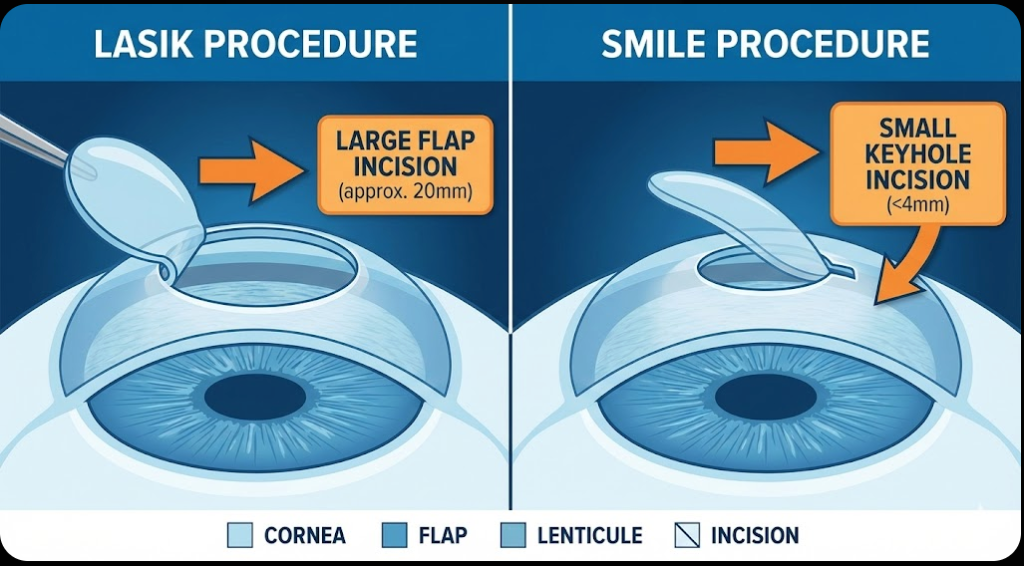
LASIK, which has been performed successfully for many years, requires the creation of a thin, hinged flap on the surface of the cornea. This flap is lifted, the underlying tissue is reshaped using an excimer laser, and then the flap is carefully replaced. While highly effective, the creation of this flap requires a relatively large incision and is the primary reason why patients are advised to avoid rubbing their eyes or participating in contact sports for a period afterward.
SMILE takes a fundamentally different approach. It uses a single, high-precision femtosecond laser to create a thin, contact lens-shaped piece of tissue (called a lenticule) within the cornea. Instead of creating a flap, the surgeon removes this lenticule through a tiny, keyhole incision—typically less than 4 millimeters wide. This small incision is the main reason why many patients and doctors consider SMILE the next evolution in corrective surgery.
Impact on Corneal Nerves and Dry Eye Risk
One of the most talked-about differences between SMILE and LASIK is the potential impact on corneal nerves. When the flap is created during LASIK, a larger number of corneal nerves are severed. These nerves are crucial for tear production and surface sensation. This disruption is the main reason why temporary dry eye syndrome is a very common side effect after traditional LASIK.
Because SMILE requires only a tiny incision and avoids creating a large flap, the disruption to the corneal surface nerves is significantly minimized. While dry eyes can still occur after SMILE, many studies suggest the risk is lower and the duration of symptoms is typically shorter compared to traditional LASIK procedures, making SMILE an appealing option for patients already concerned about chronic dry eye.
Structural Integrity and Stability
For individuals with active lifestyles, the structural stability of the cornea post-surgery is a major concern. Because LASIK involves a permanent flap that never fully adheres back with its original strength, there is a very small but persistent risk of flap displacement due to trauma, even years after the surgery.
Since SMILE avoids creating a flap altogether and only requires a tiny incision that heals quickly, the structural integrity of the cornea is maintained to a much greater degree. This makes SMILE highly attractive to military personnel, first responders, athletes, and anyone who might face situations where their eyes could be subjected to physical impact.
What Makes SMILE Eye Surgery So Trendy?
The popularity of SMILE extends beyond just clinical benefits; it fits perfectly into our modern need for fast results and minimal downtime. It’s a cutting-edge procedure delivered through cutting-edge technology, appealing to patients who want the quickest and least disruptive path to clear vision.
The Minimally Invasive Approach
The phrase “minimally invasive” is often associated with modern medicine, and SMILE truly embodies it. The procedure typically takes less than 30 minutes for both eyes, and the actual laser time is often under 30 seconds per eye. The small incision size means less healing is required on the surface of the eye, translating directly into less post-operative discomfort and a faster visual recovery.
Faster Recovery Times
One of the biggest draws of SMILE eye surgery is the expedited recovery process. While vision is usually good almost immediately after the procedure, patients often report that they can return to non-contact sports, showering, and applying makeup much sooner than they would after LASIK. For instance, many surgeons allow patients to resume light exercise within 24 to 48 hours, and swimming or using hot tubs often within just a few days, compared to potentially weeks after traditional flap-based surgeries.
Ideal Candidates for SMILE
SMILE is currently approved primarily for correcting myopia (nearsightedness) and myopic astigmatism. It is an excellent option for patients who:
- Have moderate to high levels of myopia.
- Are unable to qualify for LASIK due to thin corneas.
- Lead very active or athletic lifestyles.
- Are worried about post-operative dry eye syndrome.
It is important to note that SMILE is not a universal solution; a comprehensive eye examination is necessary to determine if your specific prescription and corneal topography make you a suitable candidate for this advanced procedure.
SMILE eye surgery represents a major leap forward in vision correction technology. By eliminating the need for a large corneal flap and utilizing a precise, minimally invasive technique, SMILE offers excellent visual outcomes with the added benefits of reduced risk of dry eye and enhanced corneal stability. While the long-established results of LASIK are undeniable, for those seeking the latest in minimally disruptive technology and faster returns to daily life, understanding the benefits of SMILE is essential for making an informed decision about your future vision. Always consult with an experienced eye surgeon who can assess your specific needs and guide you through the best path to achieving visual freedom.