

Aging happens to all of us, but that doesn’t mean we have to settle for jowls, sagging skin, and deep lines. If you’ve been considering facial rejuvenation, you’ve likely spent hours researching the procedure and looking at stunning before-and-after photos. It represents one of the most significant steps you can take toward turning back the clock. But there is one crucial question that dominates every search: what is the actual facelift cost?
It’s a complex answer, largely because the total price tag for this highly customized procedure involves much more than just the surgeon’s fee. In fact, many national averages you see quoted online often exclude essential elements like facility charges and anesthesia. Understanding the full scope of expenses is key to planning your journey. We’re here to give you the real, transparent breakdown so you can budget accurately and confidently for your transformation.
Understanding the Components That Determine a FaceLift
When patients ask about the price of their procedure, they often assume there is a fixed price menu. However, getting a facelift is highly tailored to the individual patient’s needs, anatomy, and desired outcome. There is no one-size-fits-all approach, which is why the final number can fluctuate widely.
The technique used by your surgeon will be the primary driver of complexity and time in the operating room, which directly impacts the total charge. For example, a mini facelift is less invasive and takes less time than a traditional approach, thereby carrying a lower cost. A deep plane face lift, which involves lifting deeper tissues beneath the muscle layer (SMAS), offers the most dramatic, long-lasting results, but requires immense expertise and additional time under anesthesia, placing it at the higher end of the pricing spectrum.
The surgeon’s customized surgical plan will factor in specific areas of the face that need addressing. Does the patient require neck contouring and liposuction alongside the facelift? Are they also opting for adjunctive procedures, such as eyelid surgery (blepharoplasty) or a brow lift, to ensure a seamless, harmonious result? The inclusion of these additional elements will naturally increase the total time and subsequent facelift cost.
Breaking Down the Average Face Lift Cost
While it is difficult to pin down an exact national average, most patients can expect the total cost of a comprehensive, modern face lift performed by an experienced, board-certified plastic surgeon to fall within a broad range, typically between $15,000 and $30,000 or more, depending on geography and complexity.
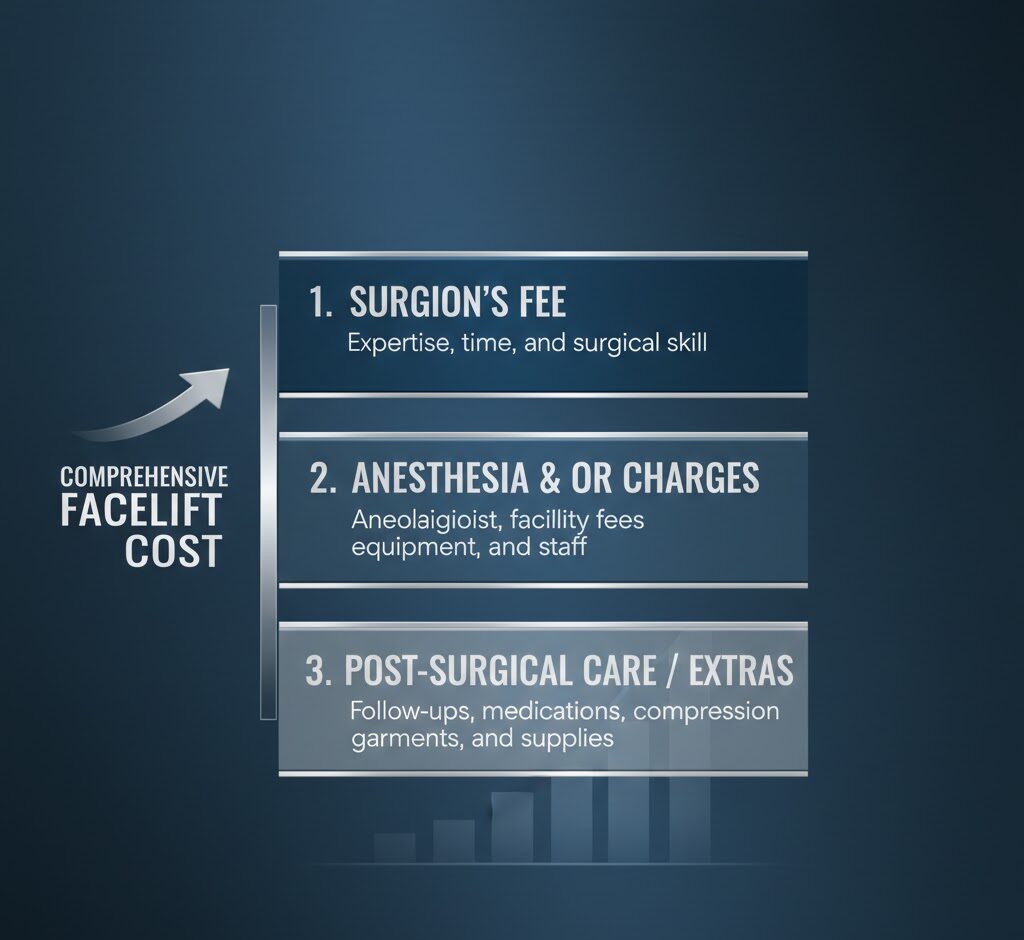
This range is comprised of several distinct financial categories. It is essential to look beyond the American Society of Plastic Surgeons (ASPS) average—which traditionally only represents the surgeon’s fee—and account for the full scope of expenses.
The Surgeon’s Fee (Expertise is expensive)
This is the largest variable cost. The surgeon’s fee reflects their skill, reputation, board certification, and the complexity of the procedure they are performing. Surgeons who have dedicated years to specializing in facial plastic surgery and maintain exceptional results will command higher fees. You are essentially paying for their precision and their track record, which directly affects the safety and quality of your outcome. While it is tempting to choose the lowest price, remember that in cosmetic surgery, compromising on expertise often translates to compromising on results and safety.
Anesthesia and Operating Room Charges
These charges cover the professional services of the anesthesiologist and the use of the surgical facility. Anesthesia costs are billed based on time, meaning the longer the facelift procedure takes, the higher the charge will be. Similarly, facility fees cover the operating room equipment, nursing staff, supplies, and medications used during your surgery. Choosing an accredited surgical facility is a non-negotiable step for patient safety, and those standards come with associated costs.
Geographic Location and Practice Overhead
Just like real estate, plastic surgery pricing is heavily influenced by geography. Practices in major metropolitan areas with high costs of living, such as New York, Los Angeles, or Miami, typically have higher overhead expenses (staff, rent, insurance). These costs are inevitably reflected in the final facelift cost. Additionally, the overall demand for cosmetic surgery in a particular region can also affect pricing.
Post-Surgical Care and Extras
The total expense may also include costs incurred after the surgery. These can include mandatory items like compression garments or specialized recovery tools, prescribed medications (pain management, antibiotics), and sometimes, follow-up procedures like laser treatments or injectable fillers to optimize the final result once the main surgery has healed. Furthermore, some surgeons include post-operative visits in their original fee, while others may bill for them separately. Always clarify what is included in your quoted price.
Is Investing in A Face Lift Worth It?
For many patients, the decision to undergo a facelift is not just about aesthetics; it’s about restoring confidence and congruence between how they feel inside and how they look on the outside. When viewed through the lens of longevity, the cost becomes an investment.
Unlike non-surgical options such as fillers or thread lifts, which require continuous maintenance every 6 to 18 months, a surgically performed facelift provides results that can last ten years or more. While the initial face lift cost is substantial, the long-term investment often proves more cost-effective and provides a far more significant, structurally sound result than years of temporary procedures combined.
The key to maximizing the value of your investment is thorough research. Ensure the professional you choose is board-certified, specifically in plastic surgery, and has extensive experience performing a facelift. Ask for detailed before-and-after portfolios and testimonials. A personalized consultation is the only way to get an accurate quote tailored to your anatomy and goals.
Conclusion
The true face lift cost is a mosaic of several factors, including the surgeon’s expertise, the surgical technique employed (such as a deep plane vs. a mini lift), the time spent under anesthesia, and the geographical location of the practice. While the national average for the surgeon’s fee might be cited around $8,000, remember that the total out-of-pocket expenditure is often two to three times that number once facility and anesthesia fees are added. By understanding these variables and prioritizing expertise and safety, you can approach your cosmetic journey with full financial clarity.