
Deciding to get a tummy tuck is a huge step toward achieving your body goals. You’ve done the research on the procedure itself, imagined what it will feel like to finally have a firm, flat midsection, and perhaps even picked out your ideal surgeon. But if there’s one aspect of the process that gives most patients pause, it’s the thought of visible scarring.
It’s important to acknowledge this upfront: achieving a dramatically flatter tummy requires an incision, and that incision results in a scar. However, modern techniques and diligent aftercare mean that these scars are highly manageable, strategically placed, and often fade beautifully over time. Understanding what causes tummy tuck scars, where they are placed, and how to care for them is the key to minimizing their visibility and feeling completely confident in your final results.

Preparing for Tummy Tuck Surgery: Understanding the Scar Location
When you commit to tummy tuck surgery, you are essentially trading excess skin and loose abdominal muscles for a permanent scar that is designed to be easily hidden. The primary goal of a successful procedure is not just contouring the abdomen, but also making sure the resulting scar fits discreetly beneath clothing.
The extent and location of the scar depend entirely on the type of operation you undergo. The plastic surgeon will discuss your specific needs based on the amount of skin laxity and excess fat you have.
For a traditional or full tummy tuck, the incision usually runs horizontally across the lower abdomen, stretching from hip bone to hip bone. The good news is that this line is placed exceptionally low—designed to be completely concealed by most underwear, bikini bottoms, and swim trunks. There is also a small, circular incision around the belly button, which is required to reposition it into the newly tightened skin.
If you are only addressing minimal loose skin below the navel, you might be a candidate for a mini tummy tuck surgery. This type requires a shorter horizontal incision and usually avoids the need for a belly button incision altogether. On the flip side, if you have significant skin excess extending around the flanks (often seen after massive weight loss), an extended tummy tuck will result in a longer incision that wraps slightly around the hips.
Scar Management: From Incision to Fading
The outcome of your tummy tuck scars is about 50% dependent on the skill of your surgeon and 50% dependent on how dedicated you are to post-operative care. Even the most perfectly closed incision can heal poorly if proper care guidelines are ignored.
Immediate Post-Op Care
In the first few weeks, your focus is simply on keeping the incision clean and dry, minimizing tension on the wound, and following your surgeon’s instructions regarding drains and compression garments. Tension is the enemy of a fine line scar. Any pulling or straining of the skin in the early healing phase can cause the scar to widen and thicken. This is why proper rest and movement restrictions are critical immediately following your tummy tuck surgery. Avoid strenuous activity and heavy lifting for the recommended period.
Long-Term Scar Treatment
Once the incision has fully closed and the sutures are removed (usually 2 to 4 weeks post-surgery), you can begin active scar management. This phase is crucial for transforming a red, raised line into a soft, flat, and lightened scar.
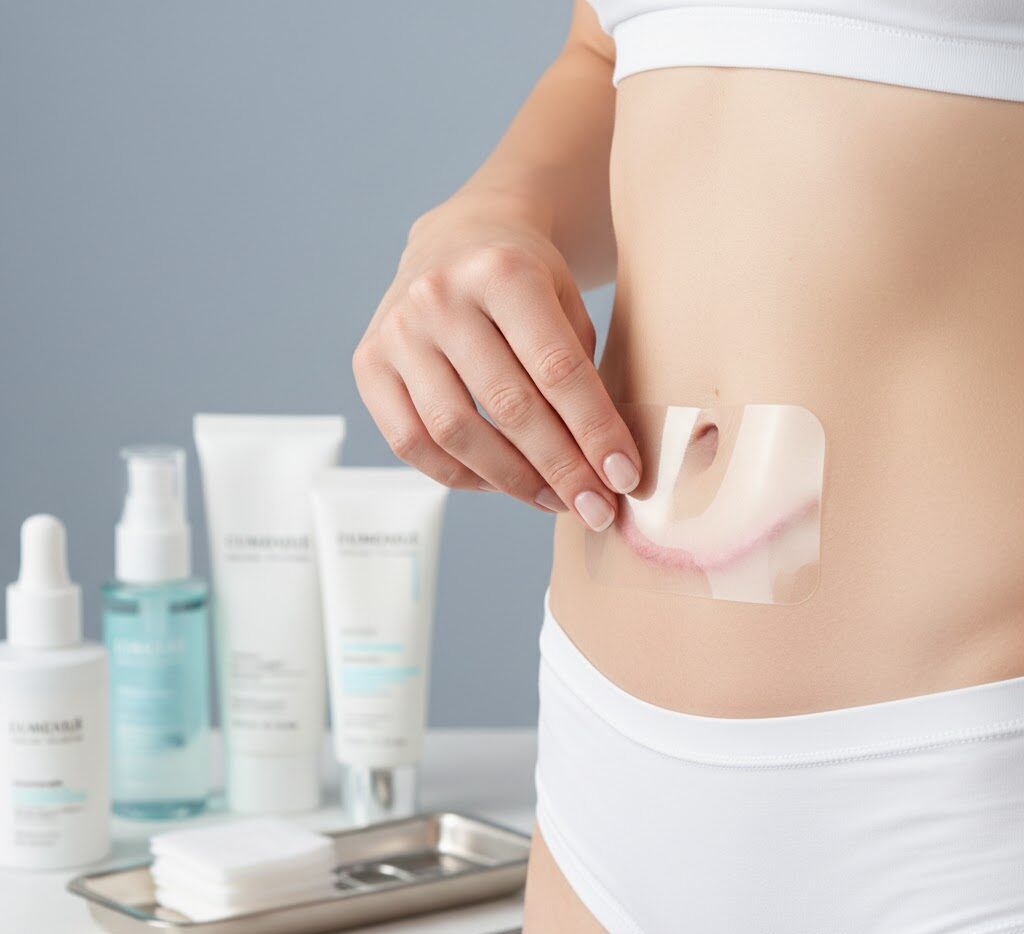
Silicone is considered the gold standard in scar reduction. Applying silicone sheets or specialized gels daily for several months helps hydrate the scar tissue, regulate collagen production, and ultimately soften the appearance of the scar.
Scar Massage: Once cleared by your surgeon, massaging the scar gently several times a day can help break down internal scar tissue and increase blood flow to the area.
Sun Protection: This is non-negotiable. UV rays are extremely damaging to new scar tissue and can cause permanent hyperpigmentation (darkening). For the first year, your tummy tuck scars should be covered with clothing or sunscreen with a high SPF anytime they are exposed to the sun.
Scars take a long time to mature—often 12 to 18 months—so patience and consistency with your treatment routine are essential for the best outcome.
When to Seek Professional Scar Revision
While most tummy tuck scars heal well with diligent home care, sometimes they can become hypertrophic (raised, red, and thick but confined to the original incision line) or keloid (raised, thick, and growing beyond the original incision line). If this happens, treatments like corticosteroid injections, laser therapy, or even surgical scar revision may be used to further improve the aesthetic result.
What Determines Your Tummy Tuck Price and Overall Value?
It is easy to get caught up searching for the cheapest tummy tuck option, but when considering a procedure that affects your body contour permanently, especially regarding the visibility of your tummy tuck scars, value is far more important than a low price.
The total tummy tuck price can vary wildly, typically ranging anywhere from $8,000 to over $15,000, depending on several key factors. These factors are directly correlated to the expertise you are receiving and, ultimately, the quality of your scar outcome.
- Surgeon’s Expertise and Reputation: A board-certified plastic surgeon with extensive experience performing tummy tuck surgery will likely charge a higher fee. This premium reflects their skill in achieving optimal contouring and, critically, their precision in closing incisions meticulously to minimize visible scarring.
- Geographic Location: Costs are generally higher in major metropolitan areas with a higher cost of living.
- Type of Procedure and Facility Fees: A full abdominoplasty combined with liposuction (often called a “lipo-tuck”) will naturally increase the overall tummy tuck price. Similarly, the fee for using an accredited surgical facility and the charges for the anesthesiologist are included in the final cost.
Remember, investing in a highly skilled surgeon means investing in a smoother recovery and a less noticeable scar. Cutting corners on the tummy tuck price can sometimes lead to results that require costly revisions later, both in terms of contouring and scar management.
A flatter abdomen and a sculpted waistline often come with the trade-off of a scar, but knowing the truth about tummy tuck scars empowers you to manage the healing process effectively. By selecting an expert surgeon for your tummy tuck surgery and committing fully to the prescribed aftercare routine, you can ensure that your permanent mark of transformation fades into a barely noticeable line, allowing you to proudly embrace your new, confident physique.