If you’ve noticed that your breasts aren’t quite sitting where they used to, you are definitely not alone. Gravity, aging, pregnancy, and significant weight changes are natural parts of life that often lead to ptosis, the medical term for breast sagging. This common change can sometimes lead people to feel less confident in their wardrobe or body shape.
Fortunately, modern aesthetic medicine offers several excellent ways to restore a more youthful, perkier position to the breasts. For many people, the best and most permanent solution is a surgical breast lift, known medically as a mastopexy. This procedure is incredibly popular because it directly addresses the laxity of the skin and tissue, repositioning the nipple and areola for a superior, lasting result.
Understanding your options—from traditional surgery to trendy non-invasive treatments—is the first step on your journey. Whether you are looking for dramatic revitalization or a subtle perk-up, learning about the process of a breast lift and its alternatives will help you make the best, most informed choice for your body goals.
What to Expect from a Traditional Breast Lift (The Gold Standard)
A surgical breast lift remains the most effective and reliable way to correct significant sagging. Unlike procedures that only add volume (like implants), a mastopexy primarily focuses on lifting and tightening the existing breast tissue and skin envelope. The goal is not usually to increase size, but to reshape and elevate the breast mound to a higher position on the chest wall.
The entire procedure is highly customized to the individual’s degree of ptosis and desired outcome. A skilled plastic surgeon will assess factors like skin elasticity, breast size, and the location of the nipple relative to the infra-mammary fold (the crease underneath the breast).
Who is the Ideal Candidate?
Ideal candidates for a surgical breast lift are generally healthy individuals who have reached a stable weight and are not planning future pregnancies, as significant hormonal shifts or weight changes can alter the long-term results of the surgery.
Candidates should primarily be bothered by the position and shape of their breasts rather than a lack of volume. If a patient desires both lift and increased size, the procedure can often be combined with breast augmentation (implants) for a lifted and fuller contour.
Understanding Different Incision Patterns
The type of incision used during a breast lift depends entirely on the degree of lift required:
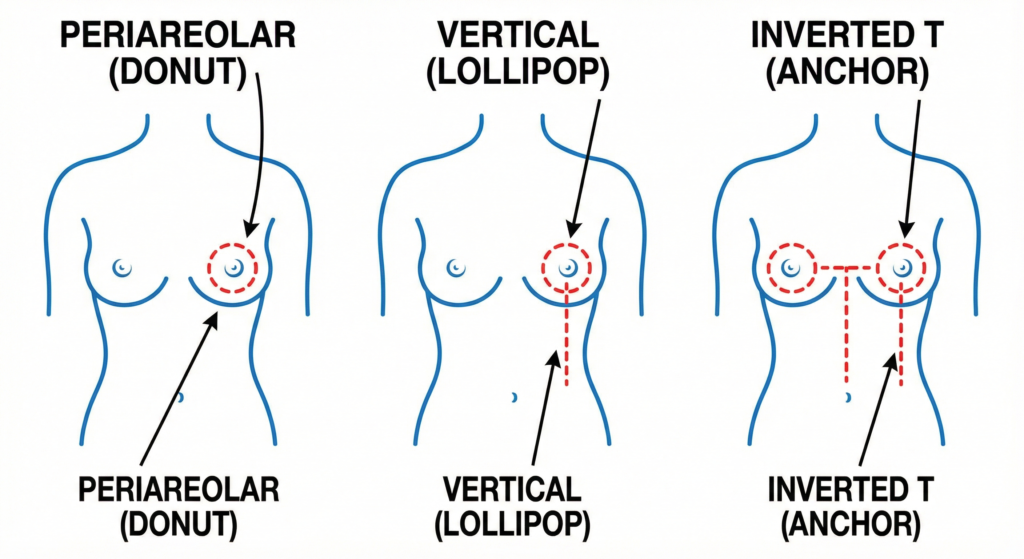
- Donut or Periareolar Lift: This involves an incision only around the edge of the areola. It is suitable for minimal sagging and often results in the least visible scarring.
- Lollipop or Vertical Lift: This technique involves an incision around the areola and a vertical line extending straight down to the breast crease. It is used for moderate sagging and reshaping.
- Anchor or Inverted T Lift: This is the most comprehensive technique, requiring incisions around the areola, vertically down to the crease, and horizontally along the crease. This pattern allows for the maximum amount of skin removal and reshaping, making it ideal for severe ptosis or after massive weight loss.
The Recovery Timeline
Recovery from a surgical breast lift typically involves about one to two weeks of downtime. Patients wear a supportive surgical bra immediately after the procedure. Initial bruising and swelling are common and usually subside significantly within the first month. Most patients can return to light desk work within a week, but heavy lifting and strenuous exercise are typically restricted for four to six weeks.
The Buzz Around Non-Surgical Options, Including the Vampire Breast
While the results of a surgical mastopexy are unmatched in permanence and dramatic change, not everyone is ready or able to undergo surgery. This has fueled the popularity of non-surgical alternatives, especially those trending on social media, like the so-called vampire breast lift.
It is crucial to understand that non-surgical options, while offering less downtime, cannot replicate the lifting and tightening power of surgery. They are generally better suited for women seeking minor improvements in texture, subtle volume enhancement, or slight shape refinement.
How Does the Vampire Breast Work?
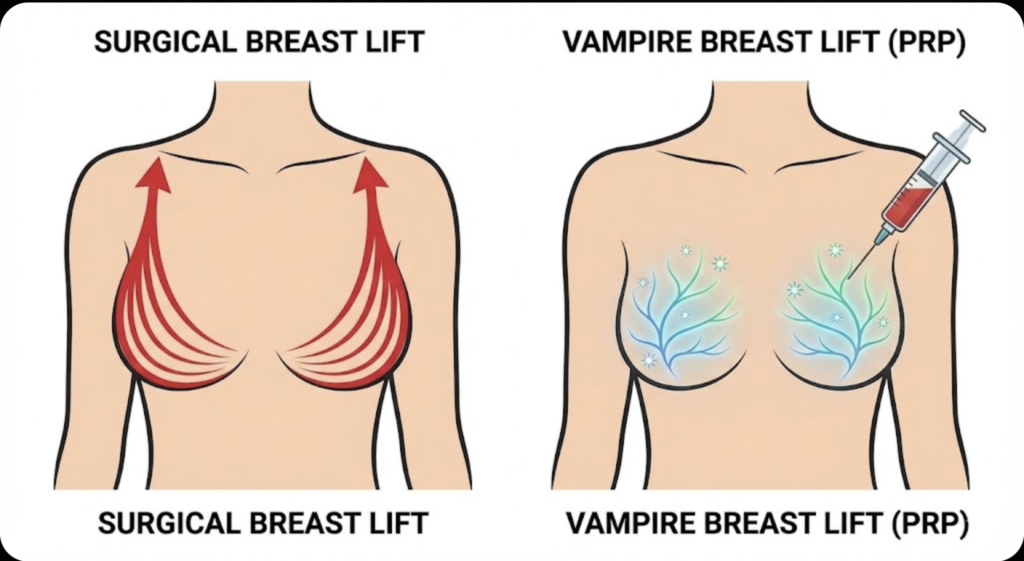
The term vampire breast lift is a catchy marketing name for a procedure that uses Platelet-Rich Plasma (PRP) therapy. PRP involves drawing a small sample of the patient’s own blood, processing it in a centrifuge to concentrate the growth factors (the “liquid gold”), and then injecting the PRP into specific areas of the breast.
The goal of injecting PRP is not to lift the tissue physically but to stimulate cellular regeneration. Proponents claim that the growth factors can improve skin texture, increase blood flow, and enhance nipple sensitivity. Crucially, the vampire breast lift does not remove excess skin or surgically reposition the nipple; therefore, it cannot correct significant sagging. Its results are subtle, gradual, and temporary, typically lasting around 9 to 18 months before a follow-up treatment is needed.
Comparing Results: Surgery vs. Non-Invasive
When considering a breast lift, it is essential to align the treatment with your expectations. If your primary concern is correcting droopiness (ptosis), tightening significantly loose skin, or repositioning the nipple to a higher point, only a surgical lift can deliver these results permanently.
Non-invasive procedures like the vampire breast lift or energy-based skin tightening therapies (radiofrequency or ultrasound) work best for patients with mild laxity who want to improve the quality of the overlying skin or restore a small amount of upper pole fullness. They offer minimal risk and minimal downtime but cannot provide the dramatic, lasting lift that surgery does.
Are There Other Non-Surgical Alternatives?
Beyond PRP, other options sometimes marketed as non-surgical lifts include thread lifts and various dermal fillers. Thread lifts use temporary sutures to pull the skin taut; however, their use in the breast area is highly controversial and generally not recommended by expert plastic surgeons dueability and potential complications. Similarly, while fillers can add localized volume, using them for a true “lift” effect in the large, mobile tissue of the breast is generally inefficient and temporary.
Making the Right Choice
Choosing the right procedure depends on your unique anatomy, lifestyle, and aesthetic goals. If you are aiming for a significant, lasting correction of sagging, the traditional surgical breast lift remains the established gold standard, offering dramatic contouring and long-term results. If you are looking for subtle refinement in skin texture or a minimal volume boost without incisions or downtime, non-surgical options like the vampire breast lift might be worth exploring. Always start your journey with a consultation with a board-certified plastic surgeon who can provide an honest assessment of what each technique can realistically achieve for you.