Deciding to enhance your body is a deeply personal and exciting journey. In the past, cosmetic procedures might have felt secretive, but today, conversations about self-confidence and body positivity are front and center. If you are exploring options for achieving a fuller, more balanced silhouette, understanding modern breast implants is the essential first step. It’s no longer about simply choosing the biggest size; it’s about achieving natural-looking results that align with your lifestyle and body type.
Modern technology and surgical techniques have made the results more predictable and the recovery process smoother than ever before. However, the sheer number of options—from implant material to profile shape—can feel overwhelming. That’s why we’ve compiled this expert guide, cutting through the jargon to give you the most relevant information on current trends and safety standards concerning breast implants.
The goal of today’s augmentation is harmonization—ensuring the new volume complements the rest of your body, rather than overshadowing it. We will walk you through preparation, recovery, and the popular combination procedure that often delivers the best aesthetic outcomes.
Preparing for Breast Implants Surgery: What to Know
The preparation stage for breast implants surgery is arguably the most crucial phase, setting the foundation for success and safety. This is where your surgical plan is customized based on your unique anatomy, skin quality, and desired outcome. It involves extensive consultation with your chosen board-certified plastic surgeon, reviewing everything from your medical history to your aesthetic goals.
The initial consultation should cover risks, benefits, and long-term care requirements. Do not hesitate to ask detailed questions about the surgeon’s experience with specific implant types and placement techniques. A great surgeon will use imaging tools to give you a realistic preview of the potential results, helping manage expectations before you even enter the operating room.
Choosing the Right Implant Type
Today’s most popular options for breast implants are saline and silicone, though newer cohesive gel (often called “gummy bear”) implants have become the gold standard for many surgeons due to their shape retention and natural feel.
Saline implants are filled with sterile salt water after placement, requiring a smaller incision. While historically popular, they feel firmer than silicone and carry a minor risk of “rippling.” Silicone implants are pre-filled with a cohesive gel, mimicking the feel of natural breast tissue. If the shell ruptures, the gel tends to stay within the implant shell or pocket. For many patients prioritizing a natural touch, silicone is the preferred choice.
Sizing and Projection Trends
Gone are the days when patients only requested the largest possible size. The current trend leans toward proportional enhancement. Surgeons now focus heavily on projection (how far the implant pushes the breast tissue outward) and width, ensuring the implant fits the chest wall structure precisely. A skilled surgeon will guide you based on your shoulder width, hip circumference, and existing breast tissue density to find a size that looks balanced, rather than overly augmented.
Recovery Timeline and Tips
Understanding the recovery period for breast implants surgery is essential for a stress-free outcome. Typically, the initial recovery period lasts about one to two weeks. During this time, you will experience soreness, swelling, and tightness.
Pain management is typically controlled with prescribed medication. Most patients are back to light, non-strenuous work within a week. However, heavy lifting and intense exercise must be avoided for four to six weeks. Following your surgeon’s post-operative instructions—especially concerning wearing a surgical support bra and attending follow-up appointments—is critical for minimizing complications and achieving the best final shape.
The Combination Trend: Breast Implants and Breast Lift
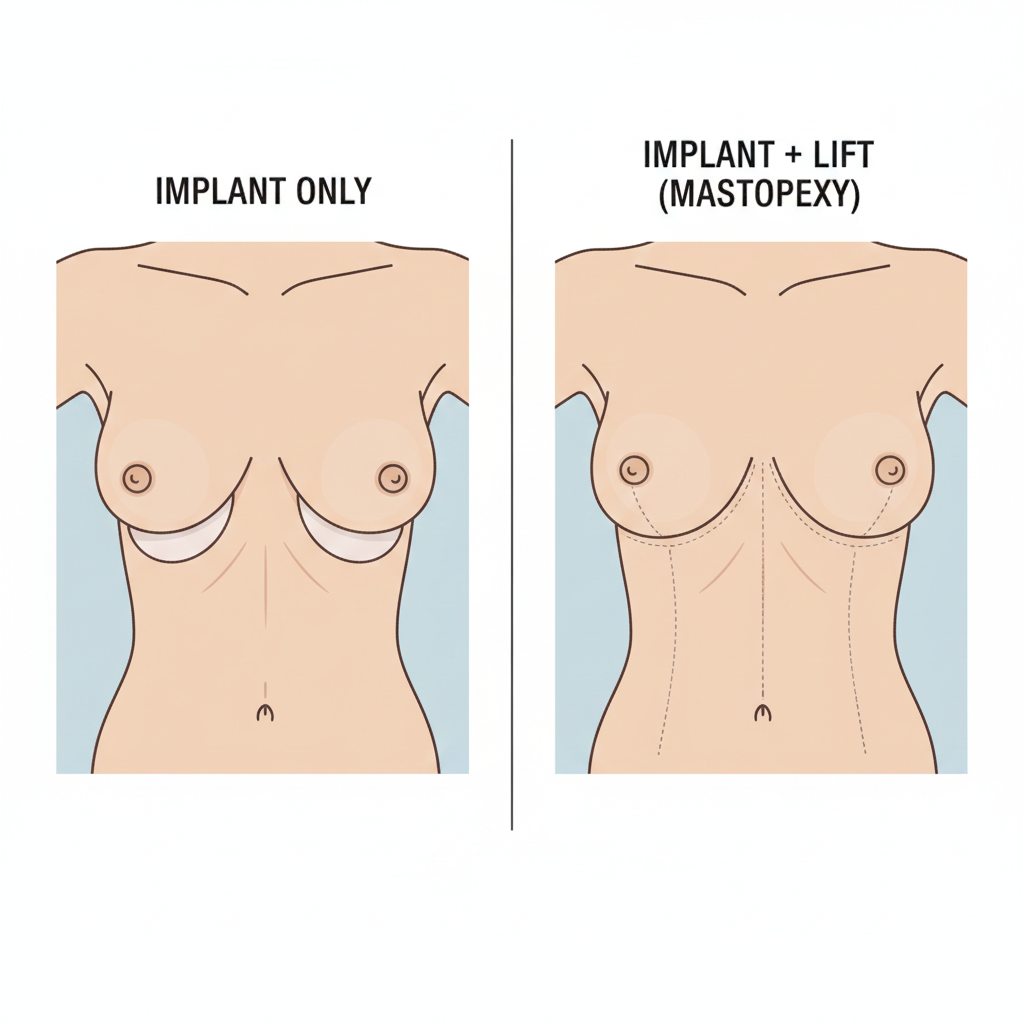
Sometimes, volume alone isn’t enough to achieve the desired aesthetic—especially for women who have experienced significant weight fluctuations, pregnancy, or aging. In these cases, combining the volume increase provided by breast implants with a reshaping procedure, specifically a breast lift (medically known as mastopexy), often yields superior results.
A breast lift repositions the nipple and areola to a higher, more youthful position on the chest and removes excess, stretched skin. When implants are placed without addressing significant droopiness (ptosis), the result can look heavy or bottom-focused. The combination procedure addresses both factors simultaneously: increasing volume and perfecting the contour and position.
When Is a Combination Procedure Necessary?
You might require a combined procedure if you have noticeably deflated breasts, downward-pointing nipples, or significant skin laxity. An experienced surgeon will assess the degree of ptosis. If the nipple sits below the inframammary fold (the crease under the breast), adding breast implants alone will not correct the issue and may even exacerbate the droopiness due to the added weight.
By performing a breast lift in conjunction with implant placement, the surgeon ensures the new volume is properly supported and positioned, resulting in a lifted, youthful, and naturally full appearance. While the recovery might be slightly more involved than augmentation alone due to additional incision lines, the aesthetic payoff is usually worth the extra recovery time.
Understanding the Scarring and Results
Any procedure involving a breast lift will result in more extensive scarring than augmentation alone. Common scar patterns include the “lollipop” (around the areola and vertical down to the crease) or the “anchor” (around the areola, vertical, and horizontal along the crease). However, surgeons are experts at placing these incisions in the least noticeable areas, and scars fade significantly over time. When combining breast implants and a breast lift, patients typically report high satisfaction because they achieve a result that is both voluminous and perfectly sculpted.
The journey toward getting breast implants is exciting, but it demands careful planning and realistic expectations. The key takeaways are simple: prioritize safety by choosing an expert, board-certified surgeon; understand the differences between implant materials; and be open to the possibility of a combination procedure, such as incorporating a breast lift, if your body history suggests it will lead to the most harmonious and long-lasting results. By arming yourself with accurate information and working closely with your surgical team, you are taking proactive steps toward achieving the confidence and look you desire.