If you are navigating the world of hair restoration, you have probably encountered a confusing alphabet soup of acronyms: FUT, FUE, and now, DHI hair transplant. For years, the standard methods offered great results, but modern technology has paved the way for even greater precision, natural density, and faster recovery times. That is where the direct hair implantation, or DHI hair transplant, method steps in.
DHI is often considered the third generation of hair transplantation, elevating the process from manual incisions to tool-assisted placement. It is a highly refined technique favored by those seeking minimal downtime and hyper-specific control over hair direction and angle. The key to this precision lies in a specialized piece of equipment—the Choi Implanter Pen. If you are serious about achieving the most natural-looking results possible, understanding the mechanics of the DHI hair transplant is essential.
How DHI with the Choi Implanter Pen Works
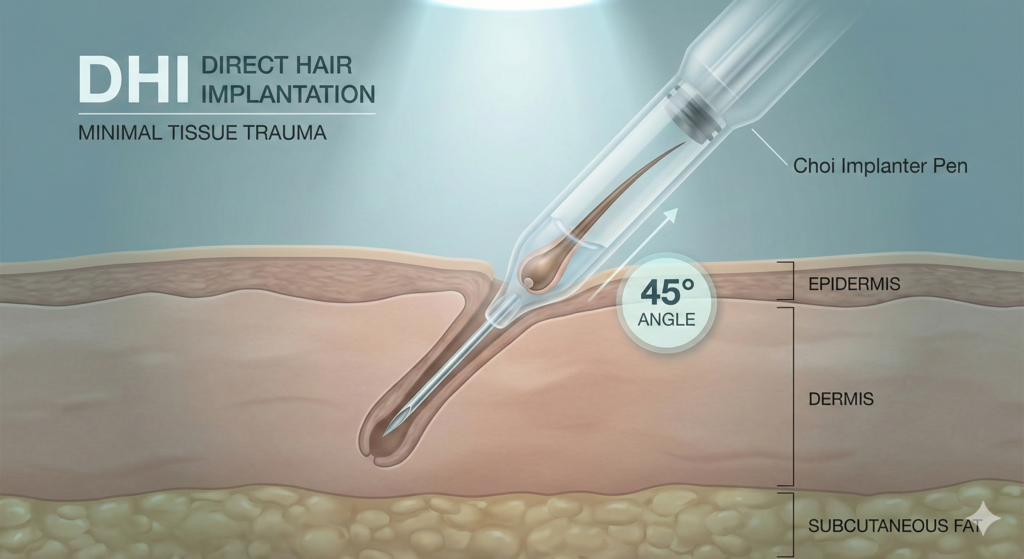
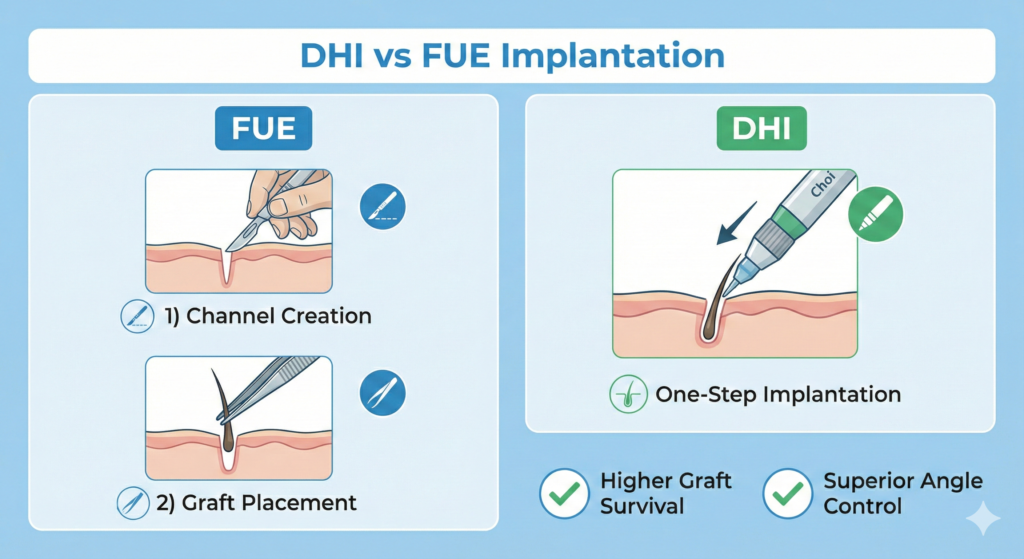
The revolutionary part of the DHI technique is the integration of the Choi Implanter Pen, a specialized medical device used to streamline the implantation process. Unlike traditional FUE, which requires the medical team to first manually create recipient channels (tiny slits) in the scalp and then insert the grafts one by one, DHI combines these two steps into one fluid motion. This direct approach offers significant advantages in graft survival and efficiency.
The Choi Implanter Pen looks similar to a pen but has a hollow needle at its tip. This needle is ultrathin and precisely sized to hold a single hair follicle (graft).
Step 1: Graft Extraction
The process begins identically to standard FUE. Hair follicles are carefully extracted one by one from the donor area (typically the back of the head) using a micro-motor and punch. These extracted grafts are then kept in a specialized solution to maintain viability while the technician prepares them for implantation.
Step 2: Loading the Pen
Each individual hair graft is meticulously loaded into the Choi Implanter Pen. This step requires immense skill and attention from the surgical team, ensuring the graft is correctly oriented within the needle tip, ready for direct implantation. The technician must ensure the correct angle and direction of the hair are maintained even before touching the recipient area.
Step 3: Direct Implantation
This is the core differentiator. The surgeon uses the pen to directly implant the graft into the recipient area. By applying gentle pressure, the surgeon simultaneously punctures the scalp and injects the follicle deeply into the predetermined depth and direction. Since there is no need for pre-made incisions, the trauma to the scalp is minimized, and the precise angle of every hair strand is controlled from the outset, leading to extremely natural density. This ability to instantly implant the graft significantly reduces the “out-of-body” time for the follicle, which is crucial for maximizing viability.
DHI vs FUE Which Method Is Better and the Benefits of DHI Hair Transplant
When comparing DHI vs FUE which method is better, it is important to remember that both techniques fall under the broader category of Follicular Unit Extraction, meaning the extraction process is similar. The major differences lie in the implantation phase, where DHI introduces unique benefits due to its tool-assisted nature.
FUE (Follicular Unit Extraction) involves two distinct phases for implantation: incision creation followed by manual placement using tweezers. While highly effective, this two-step approach exposes the grafts for longer and can result in slightly less control over the final hair angle.
DHI (Direct Hair Implantation) is a one-step implantation process that uses the Choi Pen. This technical leap results in several distinct benefits of DHI hair transplant.
Maximizing Graft Survival Rate
One of the most crucial factors in any hair transplant success is the viability of the harvested grafts. When a graft is outside the body for a prolonged period, it begins to suffer damage. Because the DHI technique allows for immediate implantation—often within minutes of extraction—the graft’s time away from the scalp’s supportive environment is drastically reduced. This low “time-out” factor translates directly into a higher graft survival rate compared to traditional methods where pre-made incisions might sit empty for some time.
Achieving Higher Density and Natural Direction
Because the Choi Pen is so precise and minimizes trauma to the surrounding tissue, surgeons can implant follicles much closer together. This allows for higher hair density, especially vital for patients looking to restore density in visible areas like the hairline. Furthermore, the pen enables the surgeon to dictate the exact angle of every implanted follicle (usually between 40 to 45 degrees). This extreme control is key to mimicking the natural growth patterns of your existing hair, leading to aesthetically superior, undetectable results.
Minimally Invasive Recovery
The DHI technique is known for being minimally invasive. Since the Choi Pen creates tiny, circular openings exactly sized to the graft—rather than linear slits—there is often less bleeding, less tissue trauma, and reduced swelling post-procedure. Because recipient site preparation (the channels) is not necessary before implantation, the recovery time is typically shorter and the healing phase is faster. Patients often report being able to return to non-strenuous activities more quickly than with older methods. Moreover, DHI often allows patients to undergo the procedure without shaving the entire recipient area, which is a major aesthetic advantage for some.
The DHI hair transplant method, powered by the ingenious Choi Implanter Pen, represents the pinnacle of modern hair restoration technology. By combining the creation of the recipient site and the insertion of the graft into a single, seamless step, DHI hair transplant offers compelling benefits: maximum graft survival, superior density, and a faster, less invasive recovery process compared to standard FUE. If you prioritize precision, natural appearance, and minimizing downtime, DHI hair transplant is a leading solution that consistently delivers high-quality, permanent results.