If you’ve spent time wishing your smile felt stronger, looked brighter, or simply stood up to the wear and tear of daily life, you’re not alone. We often think of cosmetic dentistry as purely aesthetic, involving whitening or veneers, but the real heroes of restorative dentistry are often dental crowns. These little caps are designed to protect, strengthen, and revitalize a damaged tooth, proving that the strongest things often come in small packages.
A dental crown essentially acts as a custom-fitted helmet for your tooth. When a tooth is compromised—perhaps due to a massive cavity, a severe crack, or after a root canal—it needs structural reinforcement. That’s where crowns step in, enveloping the entire visible portion of the tooth above the gum line. They restore the tooth’s shape, size, strength, and appearance, turning a vulnerable piece of anatomy into a functional, beautiful asset.
Understanding the world of crowns doesn’t require a dental degree. In fact, knowing the basics about these restorative staples is the first step toward making informed decisions about your oral health and investing in a stable, confident smile. Let’s break down the reasons why these dental devices have become the go-to solution for millions looking to maintain their mouth’s health and longevity.
Why Teeth Crowns Are Your Smile’s Best Friend
Teeth crowns are perhaps the most versatile tool in a dentist’s kit, serving both protective and aesthetic roles. While many people associate them with fixing chips or discoloration, their primary function is structural integrity. If a filling becomes too large, the remaining natural tooth structure may become fragile and prone to fracture. A crown holds that compromised tooth together, distributing pressure evenly across the bite surface.
When is a crown necessary? Generally, your dentist will recommend a crown in several key situations. If you have undergone a root canal, the tooth often becomes brittle, requiring a crown to prevent shattering. Similarly, if a tooth has a substantial crack that extends deep into the structure, a crown can bind the pieces together, preventing further damage and saving the tooth from extraction. Crowns are also commonly used to cover a dental implant or to anchor a bridge in place, ensuring long-term stability for missing teeth replacement. The ability of modern teeth crowns to perfectly mimic natural enamel means they are a functional necessity that also delivers flawless cosmetic results.
Choosing the Right Material for Your Crowns
The materials used for crowns have evolved significantly over the last few decades. The choice of material often depends on several factors: the location of the tooth (front teeth require high aesthetics, back teeth require high strength), the patient’s bite force, and their personal preferences regarding durability and cost.
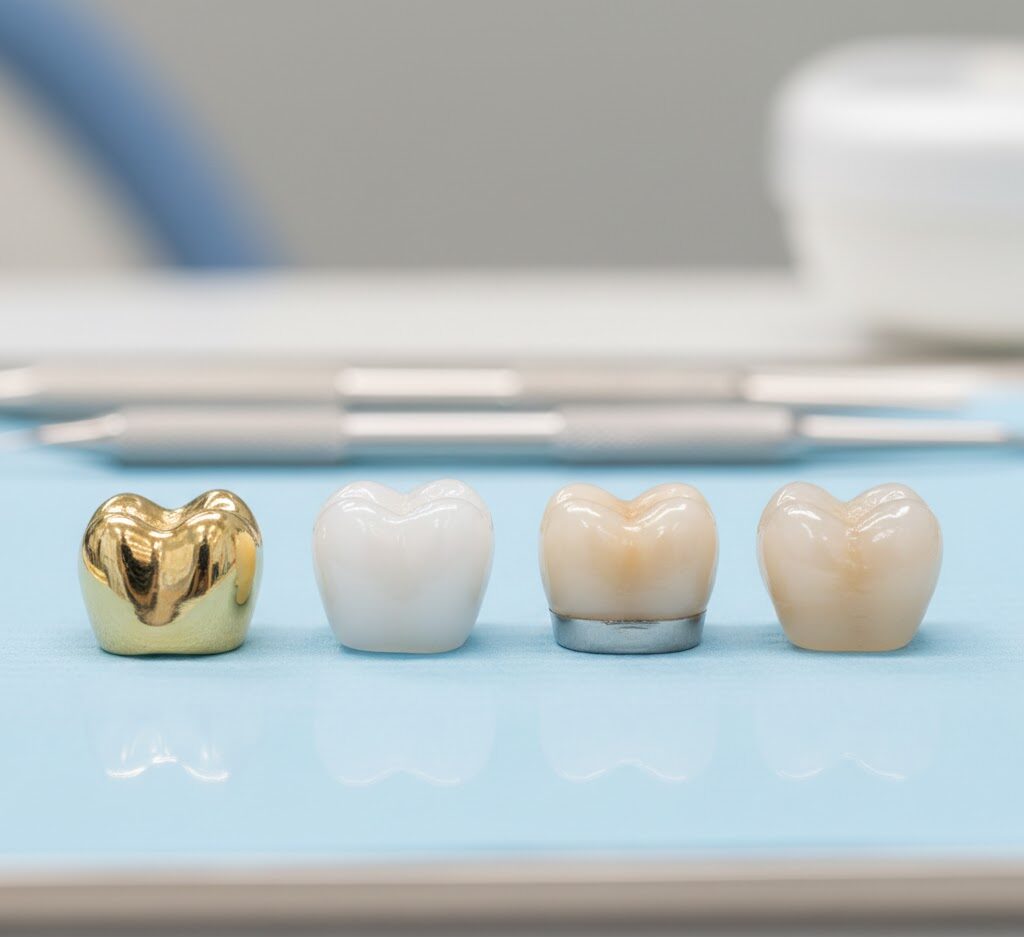
The Classic: Porcelain-Fused-to-Metal (PFM)
PFM crowns were the industry standard for decades. They offer a strong inner structure made of metal (for durability and fit) overlaid with porcelain (for aesthetics). While very reliable, a key drawback is the potential for a visible dark line near the gum line, especially as gums naturally recede over time. They are a good balance of strength and appearance, often suitable for posterior teeth where a moderate level of aesthetics is required.
The Strongest: Zirconia
Zirconia, often marketed as “white metal,” is incredibly durable and resistant to wear, making it an excellent choice for posterior crowns that bear heavy biting forces. Because it is highly biocompatible and can be shaded to match surrounding natural teeth, it is rapidly replacing PFM crowns as the material of choice for strength-focused restorations.
The Aesthetic Choice: All-Ceramic/Emax
If flawless aesthetics are your priority, particularly for front teeth, all-ceramic or lithium disilicate (Emax) crowns are typically recommended. These materials offer unmatched translucency, allowing light to pass through them similarly to natural enamel. This results in a highly realistic and beautiful restoration that is virtually indistinguishable from adjacent natural teeth. They offer good strength but may not be as robust as zirconia for heavy grinders.
The Durable Option: Gold Alloys
Though less common today due to aesthetic preference, gold alloy crowns remain one of the most durable options available. They rarely fracture and require the least amount of healthy tooth structure removal during preparation. They are highly suitable for back molars, where they are less visible and maximum strength is prioritized.
The Crown Procedure: What to Expect
Getting crowns is typically a two-visit process, ensuring precision and comfort. During the first appointment, the dentist prepares the natural tooth. This involves shaping the tooth so the crown can fit over it without appearing bulky. Impressions—either traditional putty molds or digital scans—are then taken. These impressions are crucial as they are sent to a specialized dental lab where your custom crown is meticulously fabricated to match your mouth’s structure and shade. Before you leave, a temporary crown is placed to protect the prepped tooth.
The second visit, usually two to three weeks later, involves removing the temporary crown and fitting the permanent one. Your dentist will check the fit, bite, and color before permanently cementing the crown into place. Once seated, it immediately acts as a functional, durable part of your mouth.
Maintaining Your New Smile
Once your new crown is cemented, caring for it is surprisingly simple—it requires the same attention as your natural teeth. Maintaining excellent oral hygiene is the best way to ensure the longevity of your crowns, which typically last between five and 15 years, and often much longer with proper care.
Focus on brushing twice daily with a non-abrasive toothpaste and flossing once a day. Pay special attention to the margin where the crown meets the gum line, as this area is susceptible to bacterial buildup and potential gum disease. While the crown itself cannot decay, the natural tooth underneath it can. Avoiding hard candies, ice, and sticky foods that could potentially dislodge or damage the restoration is also critical. Regular check-ups and cleanings allow your dental team to monitor the crown and surrounding gum tissue, catching any issues early.
Crowns are much more than just a cosmetic fix; they are a critical investment in the functional health and stability of your smile. Whether you need to protect a fragile tooth, support a bridge, or restore a beautiful aesthetic, there is a crown material perfectly suited for your needs. Talk to your dental professional today to determine if custom dental crowns are the perfect solution for achieving your strongest, most vibrant smile yet.